Road access:
We can get there from the road RM-426 (Yecla-Almansa), taking a road on the right at kilometre 14 which leads us directly to the ravine. From the house of Tobarrillas Baja (the downstream part of the ravine) there is a road to the West bordering the mountain and reaching Marisparza.
The best time of year to visit:
In spring, autumn and winter, especially during the second one.
The main points of interest are:
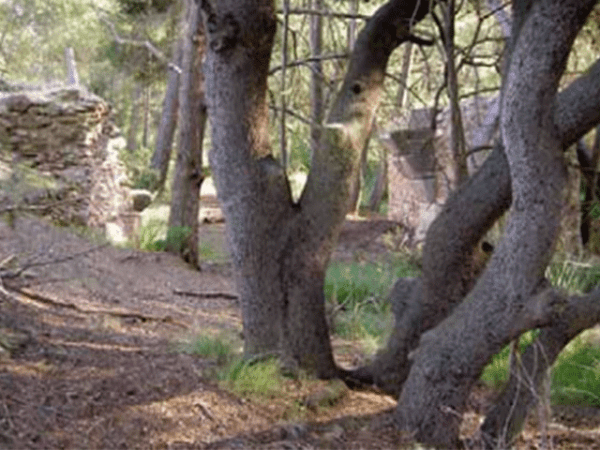
Elm grove and riparian vegetation, natural springs, house of Tobarrillas Baja (the downstream part of the ravine), remains of Roman constructions and troglodyte caves in the ravine, Marisparza and Fuente del Pinar.
Visit conditions:
Consultation with the owners is recommended.

Location:
Northern part of the town of Yecla.
An area of approximate:
1,100 hectares.
Altitude:
730 – 949 metres above sea level.
Protection regime:
None.
Administrative authority:
Private property.
Topography:
It’s a succession of hills interrupted on its central part by the course of the Rambla de Tobarrillas.
Vegetation:
Riparian vegetation is dominated by elm trees together with black poplars, rushes, anea, honeysuckles, reeds and other water plants. The hills are blanketed by Aleppo pines, kermes oak, juniper, esparto field, rosemary, sage.
Fauna:
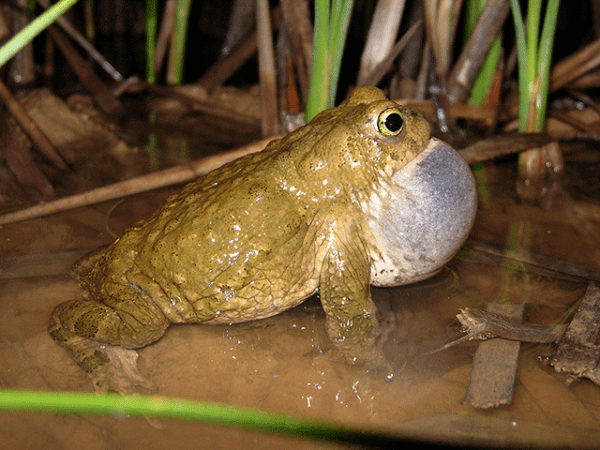
Invertebrates such as water scorpion, dragonfly, mayflies. Among the vertebrates, common midwife toad, green frog, Spanish ribbed newt, natrix maura, common nightingale, European green woodpecker, squirrel, genet, fox and wild boar stand out.
What’s so special about it?:
It’s a site of high ecological value, which rises in the municipality of Almansa passing through Tobarrillas’ mountains and finally flowing into Derramadores vast plain. The highest peak of the area is Peña de la Graja (949 metres), the name of a small rocky bank. It’s the northernmost point of the Region of Murcia.
Several Palaeolithic and Roman sites can be found in the surroundings of the ravine, such as Marisparza or Fuente del Pinar.
The most outstanding feature of the ravine is its central stretch, where riparian vegetation can be found, dominated by elm trees (Ulmus minor) and very deteriorated nowadays, together with many water plants.
There are many squirrels and other species of mammals, amphibians and birds.

